Everywhere, year round
What to eat in the Netherlands, and when to eat it
Dutch food is not what the country is famous for, which is exactly why it surprises people. A guide to the eating day.
The Netherlands is not sold to visitors on its cooking, and that is part of why the food lands well: nobody arrives with expectations. What the country does have is a set of very specific things done very well, plus four centuries of trade that put Indonesian and Surinamese kitchens on ordinary Dutch high streets.
The lunch problem, explained
Lunch in the Netherlands is traditionally a sandwich. A modest one, eaten quickly, often at a desk. This has a consequence that catches visitors out: plenty of restaurants simply do not open until dinner, and many of those that do put a blackboard outside listing the evening specials, which are not available at lunch. Every Dutch person understands this. No visitor does.
If you want a hot meal in the middle of the day, look for a pancake house, an eetcafé, a lunchroom or anything Indonesian. Dinner, meanwhile, is early. Kitchens fill from six and many stop taking orders around nine.
The short list worth ordering
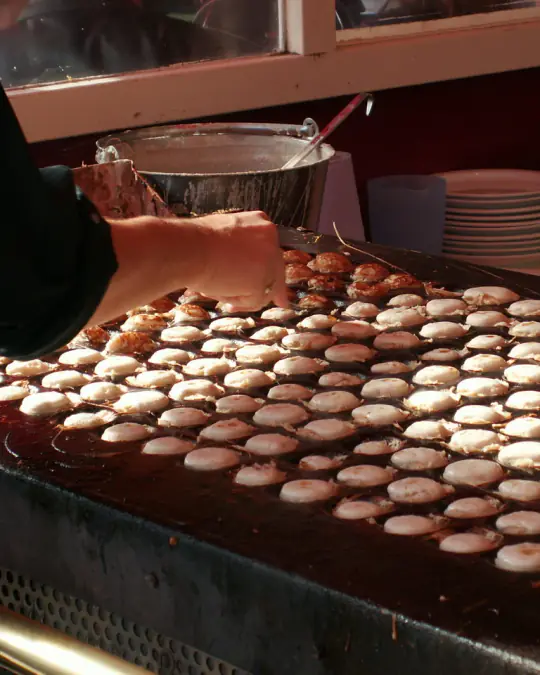
- Poffertjes: small, spongy, yeast-risen pancakes cooked in a dimpled iron pan, served under butter and icing sugar. Pictured above, cooking by the dozen.
- Pannenkoeken: dinner plate sized pancakes, savoury as often as sweet. Bacon and cheese is a normal main course, not a novelty.
- Bitterballen: crisp on the outside, molten ragout inside, served with mustard alongside a beer. Let them cool for one minute longer than you want to.
- Broodje kroket: the same ragout in a longer shape, in a soft white roll, sold from a wall of little coin operated hatches at FEBO. It is a national institution and a national joke at the same time.
- Stroopwafel: two thin waffles with caramel syrup between them. Buy it warm off the griddle at a market, not sealed in a packet.
- Erwtensoep, also called snert: pea soup thick enough to stand a spoon in, with smoked sausage. Winter only, and worth the trip in January.
The colonial kitchen is the best kitchen
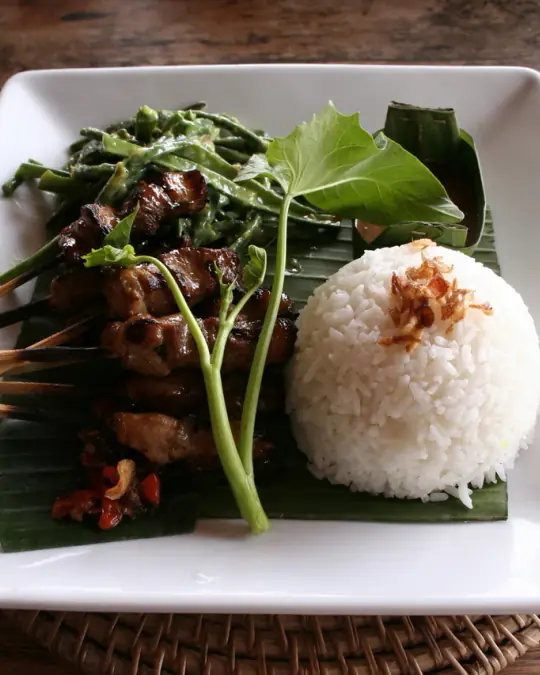
When the Dutch left Indonesia they brought back an appetite that never faded. The rijsttafel, literally rice table, is a spread of many small Indonesian dishes served around rice, and it was invented in the colonial era for exactly the reason it still works: it lets a table try fifteen things at once. Satay with peanut sauce has been absorbed so completely that it turns up as a topping on chips. Surinamese roti shops, a legacy of the other side of the empire, do the same job for a fraction of the price.
A note on herring
Raw herring is the one thing visitors brace themselves for and then like. It is cured rather than raw in the sushi sense, mild rather than fishy, and in Amsterdam it is usually served chopped in a soft roll with onion and pickle. The season has its own festival, which is a story of its own.